Order of Sporting Achievement (OSA)
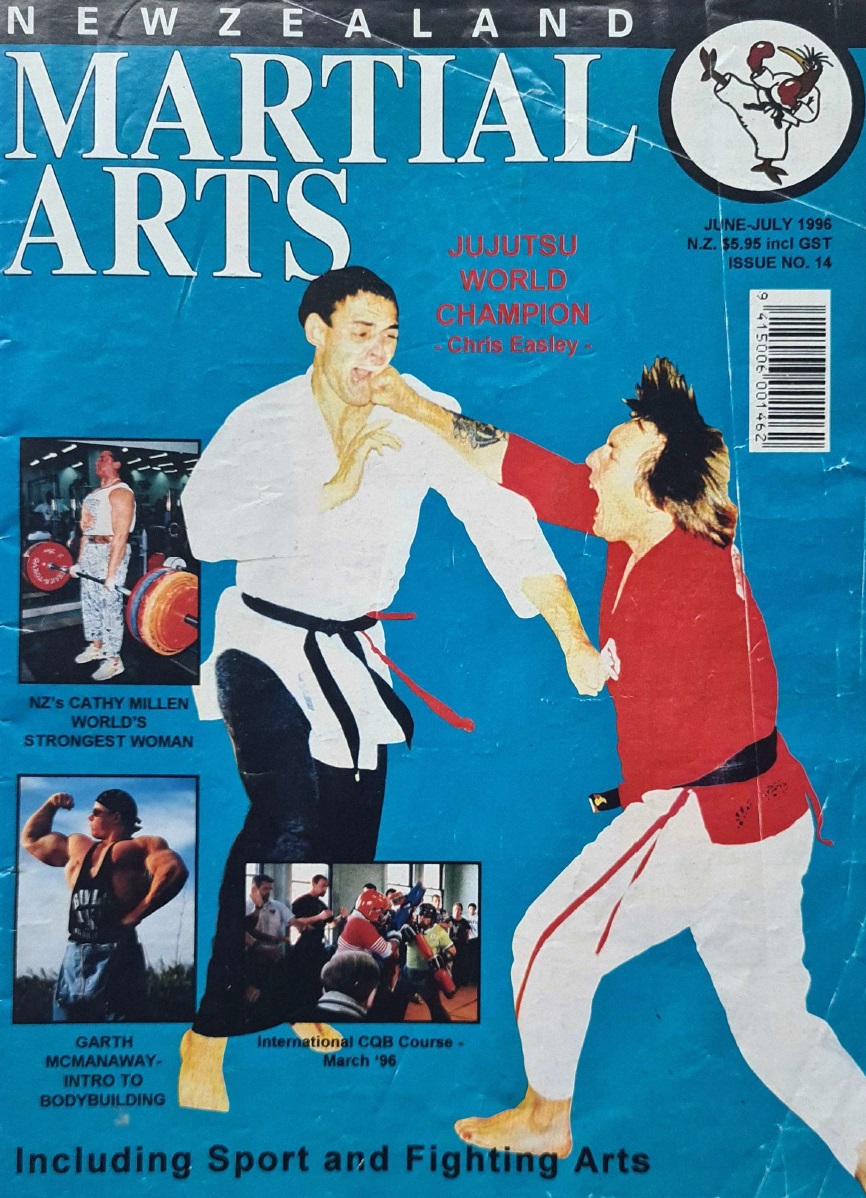
Chris Easley is a UK-born British, European and World Jiu-Jitsu champion who stands as a foundational figure in both the development of sport ju-jitsu and the emergence of Mixed Martial Arts (MMA) in New Zealand. Chris was born on the 6th of November 1960 in Pontypridd, Wales but grew up in Doncaster, South Yorkshire, in the United Kingdom. Chris started in Yawara Ryu Jiu Jitsu in 1981 with Paul Lloyd-Davies in Doncaster after being a professional rugby league player for Doncaster, York and Halifax between 1978 and 1981. The dojo environment of Yawara Ryu meant that Chris was often training seven days a week, during the evening and weekends, and was graded to Shodan in 1984 by his instructor Paul’s teacher Prof. Bill Rankin, 10th Dan (1914 – 2006). Paul Lloyd-Davies, recognized for his innovative and effective coaching methodologies, was instrumental in nurturing Easley’s early technical development and competitive mindset. Under Lloyd-Davies’ tutelage, Easley rapidly advanced through the rigorous Yawara Ryu curriculum, demonstrating prowess in both stand-up and ground-fighting disciplines. This robust foundation enabled Easley to seamlessly transition into the realm of sport-level ju-jitsu and facilitated his subsequent dominance in combat sports competitions throughout the UK.
In 1987 Chris was enrolled, by his instructor Paul Lloyd-Davies to compete at his first British National Jiu Jitsu Championships which lead to him holding the British Heavyweight Champion title for 4 years in a row. 1989 also saw Chris visit New Zealand on holiday for the first time and he was made to feel welcome at the Black Dragon Ju Jitsu Academy (BDJJA) in Auckland by Grandmaster Steve Heremaia who was the WCJJO director for New Zealand, here he trained almost every day during his stay and Chris learnt what true Kiwi hospitality looked like.
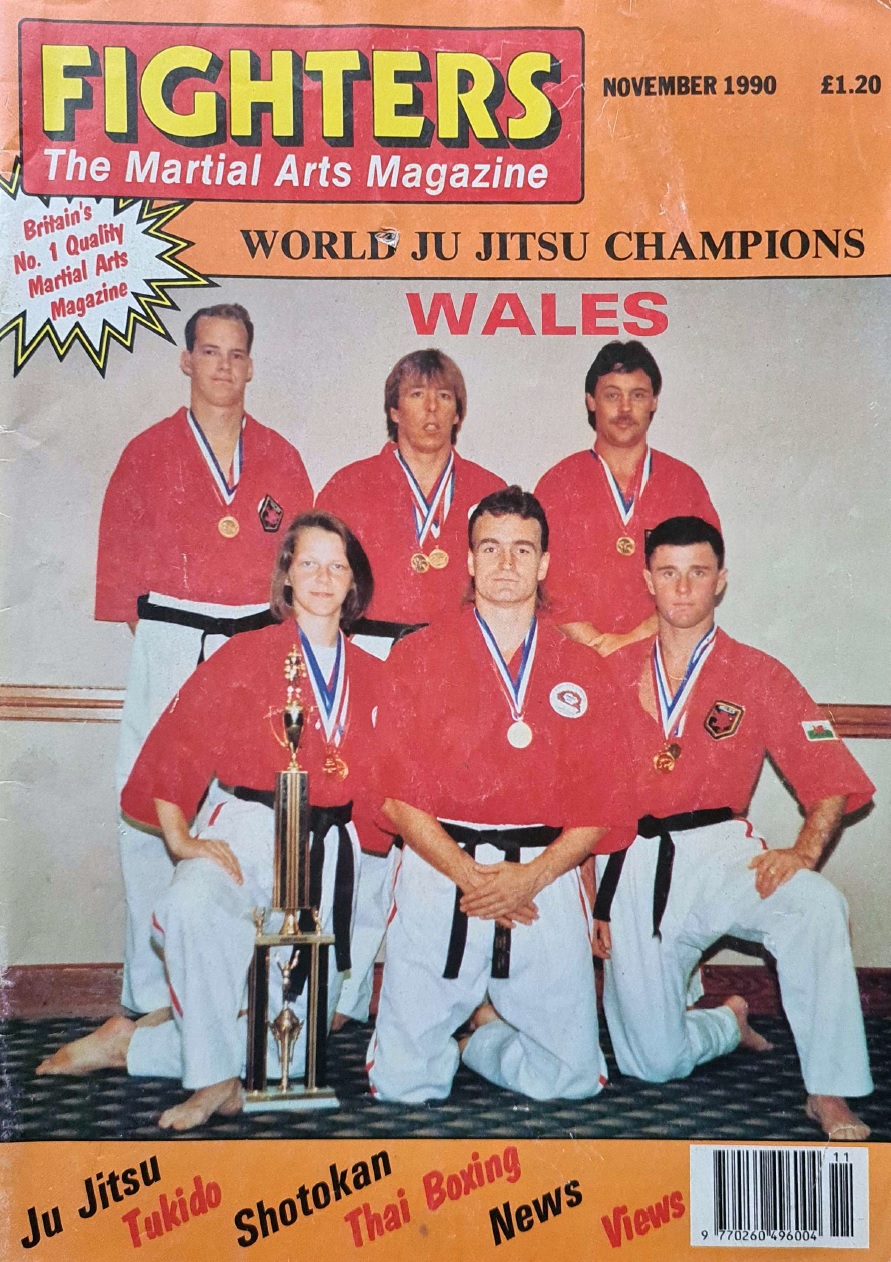
In 1990 Chris was selected to represent Wales at Light Heavyweight at the WCJJO World Jiu Jitsu Championships in North Carolina, USA, where he won both individual and team golds, and remembers seeing Les Walker from the BDJJA win a gold for the New Zealand team in the lightweight division. Chris then in subsequent years went on to win another two more world titles in different sport Ju Jitsu world organisations. It was during this phase that he participated in iconic matchups, such as his noted appearance at Europe’s Freestyle Sport Karate Grand-Prix, where he narrowly lost in the finals to the legendary multiple world heavyweight champion Alfie Lewis, underscoring his standing among elite fighters.
In 1992 Chris emigrated to New Zealand and planned to retire from Ju Jitsu and Martial Arts, but it was a chance meeting with Terry Evans, and a passing thought of maybe having a train, which altered the development and direction of New Zealand Ju Jitsu for the future. At that first return to training Chris was schooled in Ne Waza by Terry, and then Chris schooled Terry in stand-up fighting. Terry opened doors for Chris to train with Rick Littlewood at Judo, Lolo Heimuli at Lee Gar, Terry Hill at San Bu Kai Karate and with a couple of Iranian wrestlers at Dillworth College. Chris regularly taught sessions with Terry, and on welcoming Lindolfo Collor into New Zealand, the melting pot of Waitakare Martial Arts had become “the” place to train in the North Island. This dojo trained the likes of Karl Webber, Steve Oliver, and Neil Swailes, which was destined to change the Aotearoa Ju Jitsu landscape and can be regarded as the first MMA dojo in New Zealand.
Chris and Terry started to run Ju Jitsu competitions and were the first people who encouraged judoka and a broader spectrum of fighters to enter. In 1995 the World Council of Ju Jitsu Organisations held their world championships in Auckland New Zealand. However, following the Games, American Ernie Boggs formulated a new version of sporting ju-jitsu, coining the phrase 'sport ju-jitsu' and formed the International Sport Jujitsu Association (ISJA). Their competition format allowed for full-contact ju-jitsu, alongside the more common semi-contact version, and introduced demonstration and grappling-only events. The first ISJA World Games was held in West Virginia in 1996 in the United States. With Chris training Terry Evans up so he could represent NZ as Team coach and team manager attending with Tom Twydle and Scott Van Gils, with Terry returning as New Zealand's ISJA director and a Gold in the veteran’s grappling division. In 1997, Chris with the involvement of Terry, started running tournaments to the new ISJA rules format with a better balance of striking, throwing and ground-fighting. Chris and Terry, then set up the New Zealand branch of the ISJA at the beginning of 1997.
During the mid-90s the Waitakere club travelled to other ju jitsu and grappling tournaments around New Zealand. One such tournament was Dave Millar’s mixed martial arts tournament at Hunterville in 1996, and it was there, Chris, Terry and Gary Powlart met Doug Bailey of NZ Jiu Jitsu School of Self Defence (NZJJS) who was one of Dave Millar’s main referees. They all met again at Hunterville the following year and in 1998 Chris with Terry and Gary led a team from Waitakere Martial Arts to Doug’s Jiu Jitsu Unlimited tournament in Hastings. That tournament gave the Waitakere team good preparation for the 1998 ISJA World Games held in Vancouver, Canada, where Terry won a sport jujitsu silver medal and operated again as team coach and manager with Chris’ involvement of improving everyone’s stand-up game.
At the start of 1998 Chris, Terry Evans, Gary Polwart and Doug Bailey ran with the idea of unifying the various ‘national’ ju-jitsu tournaments into a single national sports ju-jitsu circuit. By the end of the year ISJJA(NZ) had held four tournaments and 30 clubs had participated. The first ever true NZ representative team was selected from the top-ranked competitors for the 2000 ISJA World Games in England. Gary Polwart was team manager and refereed at those Games.
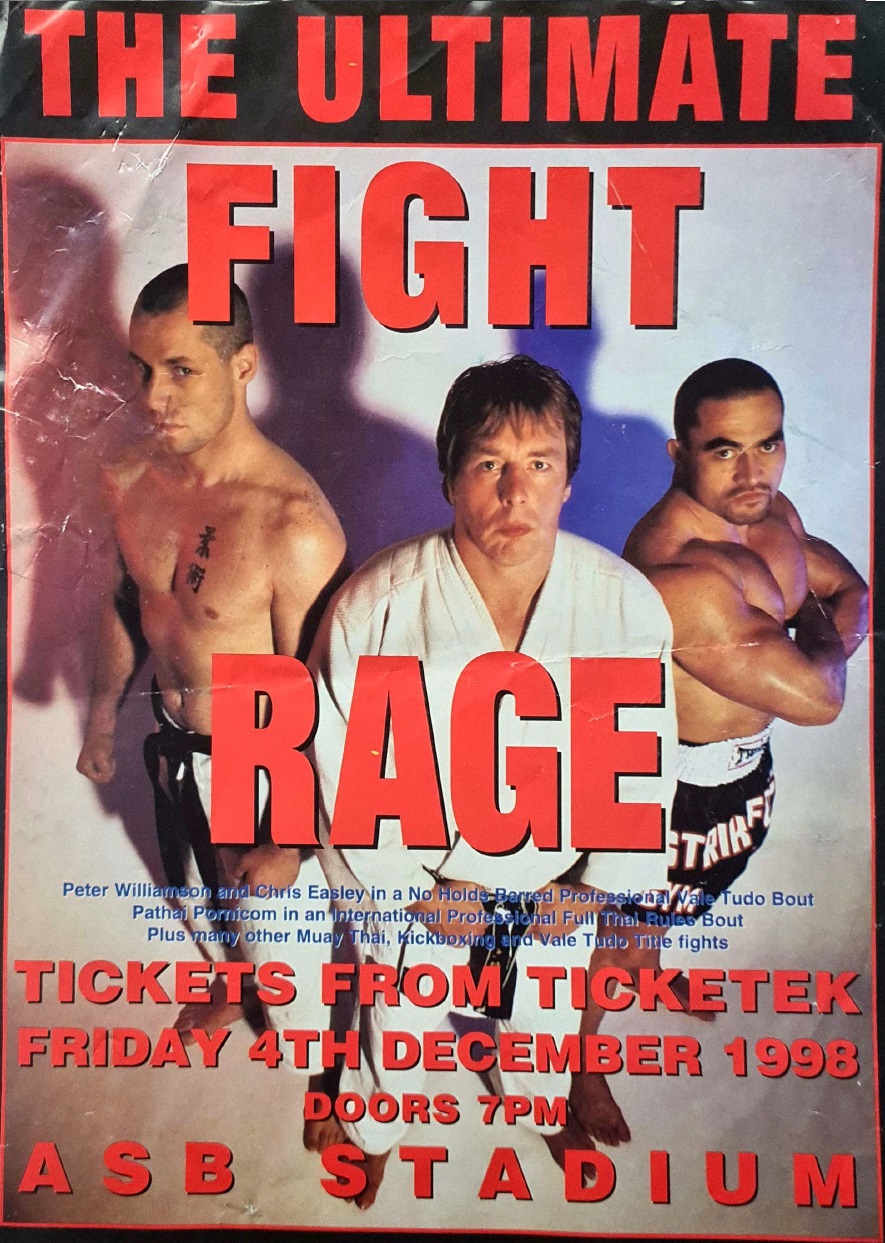
A singular achievement in Chris Easley’s legacy is his role as one of the earliest, most influential protagonists for MMA in New Zealand. At a time when “Vale Tudo” — a precursor term for MMA — was virtually unknown outside Brazil, Chris fought in one of the first Vale Tudo tournaments, the NZ Ultimate and Reality Fighting Championships, in Dunedin in 1997, after winning the first round, he then unfortunately lost to Peter Williamson in the final bout. On Friday 4th December 1998 saw Chris fight Peter Williamson again in a no-holds barred professional Vale Tudo bout at the ASB stadium in Auckland. These engagements not only revealed the functional utility of ju-jitsu in no-holds-barred environments but also showcased Easley’s own technical versatility and courage as a competitor.
2000 also saw Neil Swailes with the help of Chris refine the full contact Ju Jitsu rules and ran organised full contact tournaments under ICNZ MMA, which became one of the pathways for the development of MMA in this country, as we know it today. In 2001 the ISJJA(NZ) changed its name to SJJ(NZ) and Doug Bailey took over with Gary Polwart, when Terry stepped down as Chairman and Chris stepped away to focus more on full contact tournaments. The ongoing growth and talents of the SJJ(NZ) saw the foundation of the New Zealand Ju-Jitsu Federation (NZJJF) in August 2003. Much of the initial success of the Federation was due to the accomplishments of ISJJA(NZ) and the SJJ(NZ), and in forming the NZJJF, SJJ(NZ) allowed itself to be absorbed as a sub-branch of that organisation.
Beyond his role in ju-jitsu and MMA, Chris Easley significantly contributed to the global recognition and administrative maturation of the sport through his foundational involvement in the World Pankration Athlima Federation (WPAF). As a founding member, Easley assisted in the codification of rules, promotion of international tournaments, and the expansion of Pankration as a contemporary competitive discipline drawing on its ancient roots while supporting its evolution into a modern sport compatible with the Olympic movement.
Chris Easley was inducted into the ICNZ MMA Hall of Fame on 27th November 2009 at their ICNZ 8 Show — a recognition reserved for the earliest and most influential architects of MMA in Aotearoa/New Zealand. Chris was awarded 6th Dan in Ju Jitsu on the 5th January 2012 by his instructor and founder of Yawara Ryu Ju Jitsu Paul Lloyd-Davies. Chris has also been a qualified IMMAF and NZMMAF referee and judge since July 2015. In 2018 Chris returned to New Zealand after spending just over 3 years in the UAE coaching MMA at Primal Gym in Abu Dhabi, even during his travels teaching a martial arts class in a Palestinian refugee camp in Beirut, Lebanon.
Easley has continued to serve as a mentor for youth development initiatives such as Project K and has acted as a judge and referee for the New Zealand Mixed Martial Arts Federation (NZMMAF). In the realm of community engagement, his work as a coach and trainer at Les Mills Takapuna and other fitness centers signifies his ongoing commitment to health, fitness, and character development through martial arts. Beyond the martial arts mat, Chris Easley has leveraged his skillset as a film and television stuntman and actor, with credits in prominent productions such as “Xena: Warrior Princess” and “Hercules: The Legendary Journeys,” further cementing his presence as both a cultural contributor and a sports pioneer.
Chris’s expertise driven by Terry Evan’s leadership, in conjunction with Gary Polwart, and Doug Bailey, was instrumental in the unification of sport ju-jitsu in this country, which eventually lead to the formation of the New Zealand Ju Jitsu Federation. Chris Easley’s career encapsulates all dimensions of martial arts evolution: as an elite competitor, organizational architect, technical innovator, international referee, and educator. His role in shaping ju-jitsu and MMA in New Zealand extends from the initial implementation of credible international rulesets and tournament protocols to the mentorship of junior athletes and the institutionalization of high-performance pathways.
The structures he helped to found and mature ultimately lead to the New Zealand Ju-Jitsu Federation which today supports a broad ecosystem of martial arts practitioners, competitors, referees, and coaches united by robust standards and shared values. His career offers a model of transnational knowledge translation, technical mastery, and community engagement that continues to inspire current and future generations of martial artists, not only in New Zealand, but across the international martial arts community.
written by; Simon Ogden, OSA
04 November 2025
Outstanding Service Award